
Byline: Reviewed by Dee and Shirley, Founders, Home Care Success Consulting. Dee: Connecticut agency operator, 13+ years as a nurse. Shirley: Massachusetts agency operator, Master's degree in Healthcare Administration.
A non-medical home care agency provides companionship and help with daily living activities -- bathing, dressing, meal preparation, light housekeeping, transportation -- without delivering clinical care. It's the most common entry point for new home care business owners because the licensing bar and startup capital are both lower than a home health agency's, and the demand is real: families increasingly prefer in-home support to facility care for aging or recovering loved ones.
This guide covers exactly what services a non-medical agency provides, where its scope legally ends, how it's licensed and funded, and what it takes to start one -- along with the mistakes that trip up first-time owners most often.
What Services Does a Non-Medical Home Care Agency Provide?
Non-medical home care covers activities of daily living (ADLs) and instrumental activities of daily living (IADLs) that don't require a clinical license to perform. Typical services include:
- Personal care: bathing, dressing, grooming, toileting assistance, and mobility support -- the most requested service category, and often the reason a family first calls an agency.
- Companionship: conversation, social engagement, and accompaniment to appointments or outings -- frequently underestimated by new owners, but often the service that keeps a family renewing hours month after month.
- Homemaker services: light housekeeping, laundry, and meal preparation -- usually bundled with personal care rather than sold as a standalone service.
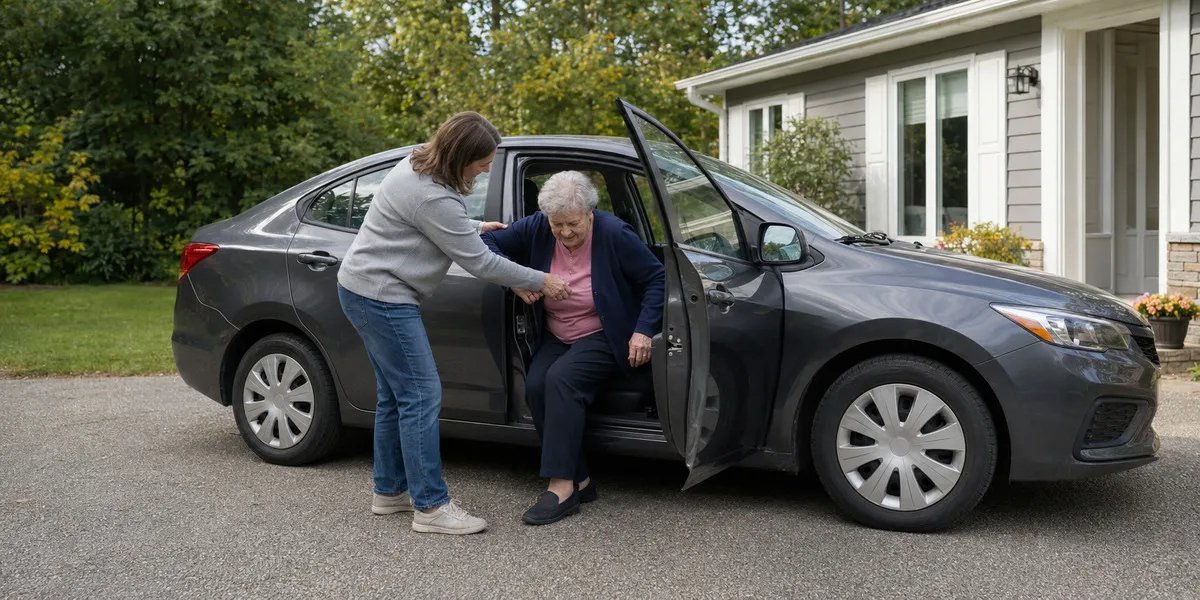
- Transportation: rides to medical appointments, errands, or social activities -- an operationally distinct service, since it usually requires additional insurance coverage and clear policies about vehicle use.
- Medication reminders: reminding a client to take medication is generally within a non-medical caregiver's scope; physically administering medication usually is not, depending on the state.
What a non-medical agency cannot do is provide skilled clinical services -- wound care, injections, therapy, or any care requiring a physician's plan of care. That line is what separates a non-medical agency from a home health agency.

Who Non-Medical Home Care Typically Serves
Understanding your likely client base helps shape everything from your service mix to your referral strategy. Non-medical agencies most commonly serve three overlapping groups: seniors aging in place who need gradually increasing support; people recovering from a hospital stay, surgery, or illness who need short-term help; and adults with disabilities who need ongoing support with daily living activities.
"The families calling in a crisis need a fast, clear answer about what we can do and how soon. The families planning ahead want to understand our approach and meet our caregivers before they commit. Treating both the same way loses you one or the other." — Shirley, Massachusetts agency operator
How Is a Non-Medical Home Care Agency Licensed?
Despite not providing clinical care, most states still require non-medical agencies to register or be licensed -- often under a category like "homemaker-companion agency." This is a real legal requirement, not a formality; operating without it exposes the business to real regulatory risk.
The general application typically requires a policies and procedures manual, proof of a surety bond (required in many states), insurance certificates, and background-check compliance for staff. Some states also require a minimum period of relevant business or healthcare experience for the named administrator.
"People sometimes assume that because caregivers aren't medical staff, the agency itself doesn't need much oversight. The state doesn't see it that way, and neither should you -- the license is what makes everything else, from Medicaid waiver eligibility to serious referral relationships, possible." — Dee, Connecticut agency operator
How Is a Non-Medical Home Care Agency Funded?
Unlike home health agencies, non-medical agencies generally cannot bill Medicare directly. Instead, revenue typically comes from:
- Private pay: an hourly rate charged directly to clients or their families, the most common funding source and generally the fastest to collect.
- State Medicaid waiver programs: home- and community-based services (HCBS) waivers that many states use to fund non-medical care. Enrollment is typically a separate process from your state license.
- Long-term care insurance: many LTC insurance policies cover non-medical home care hours, though claims processes vary significantly by insurer.
- VA contracts: some agencies contract with the Department of Veterans Affairs to serve eligible veterans through VA home care programs.
How Non-Medical Agencies Typically Grow After Launch
Most non-medical agencies grow in a fairly predictable sequence: a handful of private-pay clients in the first few months; steadier growth once a few referral sources start sending business consistently; and, for agencies that pursue it, Medicaid waiver enrollment once the agency has operational stability. Caregiver capacity, not client demand, is usually the actual growth constraint in year one.
How to Start a Non-Medical Home Care Agency
The core sequence mirrors starting any home care business, with a few non-medical-specific details:
1. Confirm your state's specific category
Non-medical licensing categories and requirements vary significantly by state -- confirm the exact category before building your business plan.
2. Write your business plan
Include your target population, service scope, and funding mix (private pay vs. Medicaid waiver vs. insurance).
3. Form your entity and get your EIN
Register your legal structure with your state, then apply for your EIN through the IRS.
4. Build your policies and procedures manual
Cover client intake, caregiver supervision, incident reporting, medication reminder protocols, and HIPAA compliance.
5. Secure your surety bond and insurance
Many states require a surety bond for non-medical agencies as a condition of licensure, alongside general liability and workers' compensation insurance.
6. Apply for your state license or registration
Submit your application with the required manual, bond, and insurance documentation attached.
7. Hire and train caregivers
Classify caregivers correctly (W-2 vs. 1099) based on how the work actually functions. Run background checks and train every caregiver against your actual policies manual.
Common Mistakes New Non-Medical Agency Owners Make
- Assuming "non-medical" means "unlicensed": The business itself usually needs to register or be licensed.
- Letting caregivers drift outside scope: A caregiver who starts administering medication directly may be operating outside non-medical scope.
- Underpricing based on competitors' rates: A rate that doesn't cover your real costs isn't sustainable regardless of what competitors charge.
- Relying on a single funding source without understanding its payment cycle: This can lead to cash-flow crises.
- Skipping transportation-specific insurance: Standard general liability often doesn't cover vehicle-related incidents.
- Growing marketing faster than hiring capacity: This leads to turning away clients or understaffing existing ones.
Non-Medical Home Care vs. Home Health: Quick Comparison
| Feature | Non-Medical Home Care | Home Health Care |
|---|---|---|
| Services | Companionship, personal care, homemaker services | Skilled nursing, therapy, wound care |
| Staff required | Caregivers, personal care aides | Licensed clinicians (RNs, LPNs, therapists) |
| Physician's plan of care? | No | Yes |
| Can bill Medicare? | Generally no | Yes, if Medicare-certified |
| Typical funding | Private pay, Medicaid waiver, LTC insurance, VA | Medicare, Medicaid, private insurance |
| Licensing complexity | Lower | Higher -- additional federal certification |
Frequently Asked Questions
Do I need a nursing license to run a non-medical home care agency?
No. Non-medical agencies don't require clinical licensure for the owner or caregivers, since the services provided don't involve clinical care. Some states may still require a designated administrator to complete specific training, so confirm your state's rule.
Can a non-medical home care agency accept Medicare?
Generally no. Non-medical agencies typically cannot bill Medicare directly, though they may qualify for state Medicaid waiver programs, LTC insurance, or VA contracts. Confirm eligibility for each funding source separately.
What can't a non-medical caregiver do?
Non-medical caregivers generally cannot provide skilled clinical services -- wound care, injections, medication administration (as opposed to reminders), or therapy. The exact scope varies by state.
Can a non-medical home care agency grow into a home health agency later?
Yes, many agencies add a home health division once the non-medical side is established, typically as a separate license under the same parent company. It's a significant step up in requirements, not a simple add-on.
What's the biggest constraint on growing a non-medical home care agency?
Usually caregiver hiring capacity, not client demand. Match your growth pace to your actual hiring capacity to avoid damaging referral relationships.
Ready to Get Started?
Understanding exactly what a non-medical home care agency can and can't do -- and how it's licensed, funded, and staffed -- is the foundation for building one correctly from day one. Dee and Shirley have built and operate non-medical agencies in Connecticut and Massachusetts, and they know the specific requirements and common pitfalls in both states. Book a free consultation to talk through your state's specific requirements and your target market before you start spending money on licensing or marketing.